


What will your machine be worth in four years? Danish Agro Machinery on selling used equipment

What will your machine be worth in four years?
Sales Director Rasmus Thing and Used Equipment Manager Tommy Jessing of Danish Agro Machinery, part of Danish Agro Group – one of Northern Europe’s largest agricultural groups – talk about selling used machinery, and why honest advice is cheaper to get now than in four years.
Farms are getting bigger, and the area they cover demands machines that can keep up. At the same time, the investment has to hold up when the machine is resold a few years down the line. So before signing, it pays to ask who will buy the machine in four years, and where they are based.
It is a bright autumn morning when Mascus meets Danish Agro Machinery. The conversation turns to current conditions for trading used machinery and what drives a machine’s value over time.
Specific farming practices in export markets matter
The used agricultural equipment market has changed a lot in recent years. A new combine harvester sold in Denmark used to be resold domestically. Today, it often has to be exported at the very first change of ownership.
Rasmus Thing explains why it pays to think long term when making new investments: “Not every country in Europe places value on the equipment we use in Denmark.”
Danish machines have a strong reputation abroad. They are well maintained, highly specified and typically in better condition than average. That also makes them more expensive and harder to sell in markets where price is the deciding factor. They sell best in countries where farming resembles Denmark’s. Parts of Spain are a good example. Ukraine is another: a major agricultural nation with professional operations and investors behind them, even during the war.
In other places, the equipment simply isn’t suited to local conditions. Rasmus Thing gives a clear example: “There’s no point selling a 12-metre (40-foot) header in Austria when the landscape is mountainous.”
Honest, straightforward advice
When investing in a new machine, it is worth consulting an experienced dealer you trust. At Danish Agro Machinery, future resale is always part of the sales process, and buyers are advised with the long term in mind. Tommy Jessing, for example, looks closely at the options selected in the configuration, because the details determine how many countries can absorb the machine later.
“Small things in a machine’s configuration can decide whether it can be sold in a given country or not,” says Tommy Jessing. “If we tick this box instead of that one, we can actually sell it in many more countries.”
It works the other way, too. Some equipment will never have a resale market, no matter how well it performs in Danish fields. “If you buy this, you need to know you’ll never get your money back,” as Tommy Jessing puts it. That is what honest advice can sound like, and it is cheaper to hear now than in four years.
Nine countries, one inventory
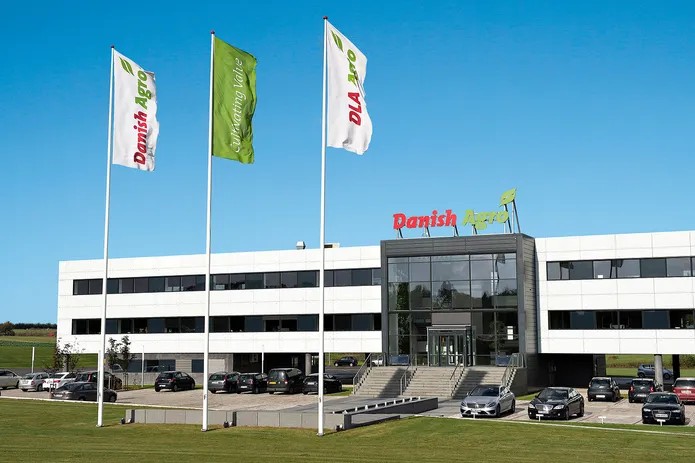
Danish Agro Machinery has operations in nine countries: Denmark, Norway, Sweden, Finland, Estonia, Latvia, Lithuania, Poland and the Czech Republic. Its network is built on relationships that go back further than the division itself, rooted in Danish Agro’s 125-year history.
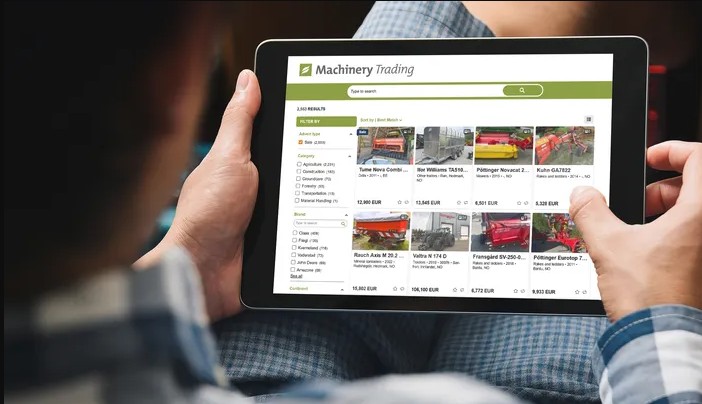
Until a few years ago, the nine countries operated as nine separate silos. They could trade with each other, but it was more cumbersome than it is today. Now every business unit shares the same Mascus IMS, a common inventory management system. Whether you are in Finland, Denmark, or elsewhere, you can search for a combine across all of the company’s locations. That has made internal trading considerably easier.
The system also publishes the used machines directly to Danish Agro’s Mascus webshop, and on to Mascus and the other marketplaces dealers use in each country. The latest step is a data feed from Mascus that pushes the machines to social media advertising in markets including Spain, France and Ukraine. No one has to enter the same machine more than once.
Nobody can say exactly what a combine will be worth in four years. But when you can see what is actually being sold, where it goes and at what price, you can make an informed estimate. That is the kind of data a valuation should rest on.
The numbers don’t tell the whole story
Data on what is sold, where it goes, and at what price provides a good starting point. However, valuating a used machine also requires a thorough physical inspection. Before Danish Agro Machinery accepts a used machine as a trade-in, the company’s technical specialists always examine and inspect it.
“When we valuate used machines, trust and experience are important—but they are never the whole story,” says Tommy Jessing. “Even machines of the same model and year can vary significantly in value depending on their condition, maintenance and specification. That is why our technical specialists are an integral part of the procurement process; they ensure an accurate assessment and high quality for both the buyer and the seller.”
Integrity builds lasting trading relationships
Most of Danish Agro Machinery’s exports go through traders and local dealers. Years of cooperation have built strong, trusting relationships. They allow the company to stand behind machines it may never inspect in person.
“There are often machines we’ve never seen, so it’s also about trusting our own colleagues and relying on our partners, just as they rely on us to stand behind what we say,” says Tommy Jessing.
Trading spirit, integrity and cooperation are the company’s core values. They are most visible in its policy of always taking responsibility for any problems that arise with a machine after the sale.
“They’re doing business with Danish Agro, so if they have any issues with the machine, we take care of it, even if we don’t know the machine,” says Tommy Jessing. This creates trust and a sense of security in an uncertain market, and partners and buyers become more inclined to come back. A single deal is rarely the goal in itself.
One step ahead
Long-standing trading relationships are one of the pillars of Danish Agro Machinery, which has a large network, particularly in Europe. The network also gives the company a good sense of where different markets are heading, and what it takes to sell a used machine.
Danish Agro Machinery is more than just the story of a group of passionate individuals who, in just over a decade, have built a solid division. It is an example of how values like trading spirit, integrity and cooperation generate profit in an uncertain and changing market.
Rasmus Thing is convinced there is more to gain: “We want to be one step ahead in the industry. That’s what we get up and work towards every day.”
Tommy Jessing adds the caveat that belongs with it: “Of course, that’s not to say it looks easy. There’s a lot of competition. But we know the challenges we face. We know what it takes.”
Marketing Manager at Mascus

